
E. Yegân Oyman
Associate Professor
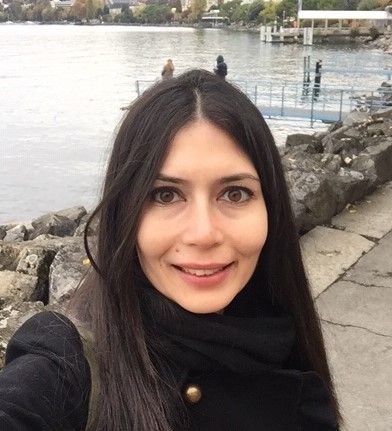
E. Yegân Oyman
Associate Professor
Address
Department of Mechanical Engineering
Bilkent University
06800 Bilkent, Ankara
Office
EA122
Phone
+90 (312) 290-3068
Biography
Yegân Erdem received her Ph.D. in Mechanical Engineering from the University of California, Berkeley, in 2013, with minor fields of study in Materials Science and Electrical Engineering. During her doctoral research, she worked in the laboratories of Prof. Albert Pisano and Prof. Fiona Doyle, developing microfluidic systems for the controlled synthesis of nanoparticles.
She earned her M.S. degree in Mechanical Engineering from the University of Washington, Seattle, in 2008. There, she conducted research in Prof. Karl Böhringer’s group on the development of textured surfaces for droplet transportation and the characterization of a walking microrobot. She received her B.S. degree in Mechatronics Engineering from Sabancı University, İstanbul, in 2006.
Her research interests include microfluidics, microelectromechanical systems (MEMS), nanomaterials, nanosensors, and energy harvesting. She has taught ME 211: Thermo-Fluids Engineering I, together with Prof. Çetin, and ME 615: Microfluidics.
Education
- Ph.D., Mechanical Engineering, University of California, Berkeley (2013)
- M.S., Mechanical Engineering, University of Washington (2008)
- B.S., Mechatronics Engineering, Sabancı University (2006)
Research
Microfluidic systems offer significant potential for synthesizing nanomaterials with precisely controlled dimensions, size distributions, and shapes. Compared with conventional batch synthesis methods, microfluidic technologies enable more accurate regulation of reaction conditions, which is essential for determining the properties and quality of the resulting materials. Further opportunities arise from assembling such nanomaterials into smart surfaces with specifically designed functionalities. The central objective of my research group is to synthesize nanomaterials using microfluidic methods and to develop smart surfaces by patterning these materials through microfluidic techniques. Potential applications of these surfaces include energy harvesting and biosensing.
During my doctoral studies, I gained practical experience in microfluidics, surface physics, and nanomaterial synthesis. My work involved developing microfabrication processes, investigating droplet transportation on textured surfaces, designing microreactors for nanoparticle production, characterizing the properties of synthesized nanomaterials, and depositing these materials onto substrates through printing techniques. Building on this experience, I aim to establish and lead an interdisciplinary research program that integrates microfluidics and nanomaterial technologies, with particular emphasis on the following research areas:
Design Of Fully Integrated Microfluidic Reactors
Current microreactor technologies primarily concentrate on nanoparticle synthesis under carefully regulated conditions to obtain particles with uniform size distributions and specified dimensions. An important next step is the development of fully integrated microfluidic platforms capable of both synthesizing and functionalizing nanoparticles within the same system. Such platforms would enable the preparation of particles for applications including biological detection and biological separation.
Performing functionalization within a microreactor can improve nanoparticle quality by allowing precise mixing at controlled concentrations while maintaining monodisperse particle size distributions. These capabilities are essential for producing nanoparticles with consistent properties and functionality.
Smart Surfaces Created By Microfluidic Networks
Another major research interest is the development of microfluidic networks that enable nanomaterials to be assembled onto substrates to create smart surfaces. These networks allow different types of nanoparticles to be positioned at specific locations on the same substrate with high precision.
Because this approach relies on the mechanical assembly of nanoparticles, it is independent of the substrate material and does not require chemical modification of the surface. This provides a versatile method for producing patterned smart surfaces with controlled material placement.
Graduate applicants should consult the department website for detailed information about the application procedure. Undergraduate students interested in participating in this research are encouraged to contact Dr. Erdem directly by email.