
Barbaros Çetin
Professor
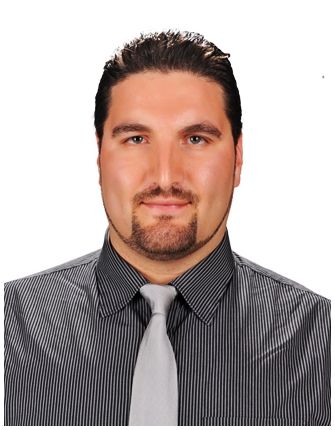
Barbaros Çetin
Professor
Address
Department of Mechanical Engineering
Bilkent University
06800 Bilkent, Ankara
Office
EA124
Phone
+90 (312) 290-2108
Biography
Dr. Barbaros Çetin completed his master’s studies in mechanical engineering at Middle East Technical University and earned his doctorate in the same field from Vanderbilt University. Under the supervision of Prof. Hafit Yüncü and Prof. Sadık Kakaç, his master’s work examined convective heat transfer in microchannels. His doctoral research, advised by Prof. Dongqing Li, advanced lab-on-a-chip methods for separating cells and microparticles. Before moving to Bilkent, he served on the faculty of METU’s Northern Cyprus Campus. He joined Bilkent University’s Department of Mechanical Engineering in 2011 and established its Microfluidics and Lab-on-a-Chip Research Group. He has completed projects funded through TÜBİTAK programs 3501, 1001 and 1003, and his research has appeared in journals such as Nature, Electrophoresis, Biomicrofluidics, Microfluidics and Nanofluidics, Electrochimica Acta, International Journal of Heat and Mass Transfer, International Journal of Thermal Sciences and ASME Journal of Heat Transfer.
Awards And Distinctions
- 2018 Science Academy Distinguished Young Scientist Award (BAGEP)
- 2018 Most Inspiring Professor Award, Bilkent University ME Class of 2018
- 2017 Turkish Academy of Sciences Outstanding Young Scientist Award (TÜBA-GEBİP)
- 2017 METU Prof. Dr. Mustafa N. Parlar Research Incentive Award
- 2016 Travel grant, University of Nebraska–Lincoln 2015 Gateway Faculty Associates Program
- 2016 Newton–Katip Çelebi Fund Researcher Links travel grant
- 2015 Bilkent University Distinguished Teaching Award
- 2014 TÜBİTAK Threshold Award for the EU PHOTONGUE proposal
- 2012 TÜBİTAK Career Program Award
- 2002 Graduation from METU with high honors
- 1997–2002 Turkish Education Foundation Scholarship
- 1991–1997 Scholarship for outstanding achievement throughout secondary education
Academic Experience
- Professor, Bilkent University, Türkiye (July 2024–present)
- Associate Professor, Department of Mechanical Engineering, Bilkent University, Türkiye (March 2018–March 2024)
- Visiting Scholar (sabbatical), Department of Mechanical Engineering, Southern Methodist University, Dallas, USA (August 2018–May 2019)
- Assistant Professor, Department of Mechanical Engineering, Bilkent University, Türkiye (September 2011–February 2018)
- Assistant Professor, Mechanical Engineering Program, METU Northern Cyprus Campus, Güzelyurt (December 2010–July 2011)
- Instructor Dr., Mechanical Engineering Program, METU Northern Cyprus Campus, Güzelyurt (September 2009–November 2010)
- Research Assistant, Department of Mechanical Engineering, Vanderbilt University, USA (September 2006–August 2009)
- Teaching Assistant, Department of Mechanical Engineering, Vanderbilt University, USA (January–December 2008)
- Graduate Student Supervisor, Sarah Shannon Stevenson Science & Engineering Library, Vanderbilt University (summers of 2007, 2008, 2009)
- Research and Teaching Assistant, Department of Mechanical Engineering, METU, Ankara (September 2002–August 2006)
Administrative Appointments
- Associate Dean, Faculty of Engineering, Bilkent University (July 2023–September 2025)
- Vice Chair, Department of Mechanical Engineering, Bilkent University (March 2020–June 2023)
Education
- Ph.D., Mechanical Engineering, Vanderbilt University (2009)
- M.S., Mechanical Engineering, Middle East Technical University (2005)
- B.S., Mechanical Engineering, Middle East Technical University (2002)
Research
My work combines two related research directions: microfluidics for biomedical use, building on my doctoral studies, and microscale heat transfer, stemming from my master’s research. In microfluidics, I investigate dielectrophoretic and acoustophoretic manipulation of biological particles through computation, device fabrication and experimental validation. Models of particle paths under fluid flow and applied electrical or acoustic forces inform device optimization; reproducible three-dimensional fabrication supports high-throughput particle processing.
My thermal-fluid research addresses the heat-transfer behavior of single-phase flows in microchannels and has recently expanded to the modeling, fabrication and experimental assessment of microgrooved and flat-grooved heat pipes.
Microfluidics For Biological And/Or Chemical Applications
Biomedical and chemical lab-on-a-chip systems combine unit operations such as separation, focusing, filtration, enrichment, trapping, sorting, detection, counting, washing, particle lysis and PCR-like reactions. Controlled movement of bioparticles makes these integrated analyses possible.
Our group uses COMSOL Multiphysics with MATLAB to study hydrodynamic and acoustic bioparticle movement in microchannels. Coupling point-particle simulation with a pseudo Monte Carlo method has allowed experimental microfluidic processes to be represented efficiently, provided particles are sufficiently small relative to channel dimensions.
To better account for particle–wall and interparticle interactions, we are developing boundary-element-method (BEM) models of electrokinetic transport, including colloids near conductive and insulating walls. Related efforts address microfluidic methods for bacterial and DNA isolation and for nanoparticle synthesis.
Microscale Heat Transfer
Advances in micrometer-scale manufacturing have enabled channels used in miniature heat exchangers, heat sinks, sensors and energy-generation devices. Reliable designs require a sound understanding of microscale fluid flow and thermal transport.
Because experimental evidence for convective heat transfer in microchannels remains limited, our group has developed numerical and analytical models for various thermal boundary conditions. These approaches have been adopted as benchmarks and extended, through collaborations with METU and ASELSAN, to grooved heat-pipe modeling and experimentation. The work has also produced a general computational framework and its Heat Pipe Analysis Toolbox (H-PAT).
PhD Research Positions
Position 1 concerns an electrically actuated artificial-cilia platform. The PhD project covers a coupled BEM/FEM solver for the electro-elastohydrodynamic response, a reduced-order model suitable for real-time applications and model-based closed-loop control for programmable metachronal waves. Experimental validation is envisaged with Prof. Selim Hanay. Relevant preparation includes numerical methods, mechanics or control.
Position 2 extends the group’s three-dimensional multiphysics particle-flow solvers to Janus particles, which have different surface characteristics on their two hemispheres. The proposed work includes asymmetric boundary conditions, electrokinetic slip, Maxwell stresses, self-propulsion, orientation dynamics and collective behavior in microfluidic confinement. Preparation in numerical methods, computational mechanics or applied mathematics is relevant.
The positions are described on the legacy profile; current availability has not been confirmed. Prospective applicants may contact barbaros.cetin@bilkent.edu.tr.
Conference And Workshop Organization
- Local organizing chair of ICCHMT 2025, the 15th International Conference on Computational Heat and Mass Transfer, Antalya (19–23 May 2025); the meeting hosted 160 participants from 22 countries, three plenaries, six keynotes and 164 technical presentations in 34 sessions.
- Co-organizer, “Electrokinetic and Dielectrophoretic Phenomena” session, ASME 17th International Conference on Nano/Micro/Mini-channels, Canada (23–26 June 2019), with Prof. Ali Beskok.
- Co-organizer of the 2018 Symposium on Advances in Thermal & Fluid Sciences, İzmir Institute of Technology (28–29 June 2018), with Dr. Murat Barışık; 15 invited speakers and approximately 70 participants, supported by the Turkish Academy of Sciences and ITFS Engineering.
- Co-organizer, “Electrokinetic and Dielectrophoretic Phenomena” session, ASME 16th International Conference on Nano/Micro/Mini-channels, Dubrovnik (10–13 June 2018), with Prof. Ali Beskok.
- Organizer of an industry session at the 21st National Thermal Sciences Conference (13–16 September 2017), featuring five presentations from ASELSAN, TAI, ROKETSAN and Ford Otosan engineers.
- Organizer, with Prof. Zafer Dursunkaya, of the Heat Pipes and High Heat Flux Heat Transfer Symposium, Bilkent University (7 October 2016); eight talks and approximately 70 participants, supported by ASELSAN and TAI.
- Organizer of the Heat Conduction and Inverse Problems workshop with Prof. Kevin Cole at Bilkent University (17 May 2016); approximately 55 academic and industry participants.
Book Chapters
Publication titles and bibliographic details are retained in their original language. (*) identifies the corresponding author.
- 21. M. B. Özer*, B. Çetin (2023). Application of ultrasonic waves in bioparticle manipulation and separation. Acoustic Technologies in Biology and Medicine, Wiley-VCH, pp. 243–304. ISBN 978-3-527-35062-9.
- 20. B. Çetin*, B. Çetin, K. D. Cole (2020). Semi-analytical source (SAS) method for heat conduction problems with moving heat source. Mathematical Methods in Engineering and Applied Sciences, CRC Press, pp. 1–18. ISBN 978-0-367-35977-5.
- 19. R. Rasooli, B. Çetin* (2019). An extended Langhaar’s solution for two-dimensional entry microchannel flows with high-order slip. Mathematics Applied to Engineering, Modelling, and Social Issues, Springer, pp. 189–212. ISBN 978-3-030-12231-7.
- 18. B. Çetin*, K. G. Güler, M. H. Aksel (2017). Computational modeling of vehicle radiators using porous medium approach. Heat Exchangers: Design, Experiment and Simulation, IntechOpen, pp. 243–262. ISBN 978-953-51-3094-9.
- 17. B. Çetin*, E. Yıldırım, Ş. Akay (2016). Mikroakışkan Sistemlerin Üretimi. Mikroakışkan Teknolojilerin Temelleri ve Uygulamaları, Ege Üniversitesi Yayınları, pp. 27–51.
- 16. C. Yavuz, B. Çetin, O. Yeşil-Çeliktaş (2016). Mikroakışkan Sistemlerin Sterilizasyonu. Mikroakışkan Teknolojilerin Temelleri ve Uygulamaları, Ege Üniversitesi Yayınları, pp. 115–137.
- 15. O. Yeşil-Çeliktaş, B. Çetin, E. Yıldırım (2016). Mikroakışkan Sistemlere Yönelik Gelecek Tahminleri. Mikroakışkan Teknolojilerin Temelleri ve Uygulamaları, Ege Üniversitesi Yayınları, pp. 199–204.
- 14. B. Çetin, B. Baranoğlu (2015). Boundary-Element Method in Microfluidics. Encyclopedia of Micro and Nanofluidics, Springer, pp. 202–213.
- 13. B. Çetin, S. Zeinali, D. Li (2015). Magnetic Pumps. Encyclopedia of Micro and Nanofluidics, Springer, pp. 1690–1695.
- 12. B. Çetin, S. Zeinali, D. Li (2015). Microfluidic Optical Devices. Encyclopedia of Micro and Nanofluidics, Springer, pp. 1980–1984.
- 11. B. Çetin, R. Salemmilani, D. Li (2015). Microfluidic Rotary Pump. Encyclopedia of Micro and Nanofluidics, Springer, pp. 2000–2004.
- 10. S. Büyükkoçak, M. B. Özer, B. Çetin (2015). Microscale Acoustofluidics. Encyclopedia of Micro and Nanofluidics, Springer, pp. 2149–2158.
- 9. B. Çetin, S. Taze, D. Li (2015). Pressure Measurements, Methods. Encyclopedia of Micro and Nanofluidics, Springer, pp. 2828–2834.
- 8. B. Çetin, D. Li (2015). Temperature Gradient Generation and Control. Encyclopedia of Micro and Nanofluidics, Springer, pp. 3225–3227.
- 7. B. Çetin, R. Salemmilani, D. Li (2015). Ultrasonic Pumps. Encyclopedia of Micro and Nanofluidics, Springer, pp. 3394–3397.
- 6. B. Çetin, D. Li (2008). Magnetic Pumps, pp. 1040–1043.
- 5. B. Çetin, D. Li (2008). Microfluidic Optical Devices, pp. 1186–1187.
- 4. B. Çetin, D. Li (2008). Microfluidic Rotary Pump, pp. 1188–1189.
- 3. B. Çetin, D. Li (2008). Methods for Pressure Measurements, pp. 1743–1745.
- 2. B. Çetin, D. Li (2008). Temperature Gradient Generation and Control, pp. 1993–1994.
- 1. B. Çetin, D. Li (2008). Ultrasonic Pumps, pp. 2128–2129.
For the complete publication record: Curriculum Vitae (PDF)
Teaching
Graduate Courses (Southern Methodist University)
- ME 7330 – Heat Transfer (Spring 2019)
Graduate Courses (Bilkent University)
- ME 501 – Mathematical Techniques in Mechanical Engineering I (Fall 2013, 2016, 2021)
- ME 503 – Numerical Methods in Mechanical Engineering I (Fall 2015, 2017, 2019, 2022, 2024)
- ME 511 – Fluid Mechanics (Spring 2012, 2013, 2015)
- ME 615 – Microfluidics (Fall 2011)
- ME 630 – Advanced Heat Transfer (Spring 2021, 2026)
- ME 631 – Conductive Heat Transfer (Spring 2017)
Undergraduate Courses (Bilkent University)
- ME 102 – System Engineering (Spring 2016–2018, 2021–2023)
- ME 211 – Thermo-Fluids Engineering I (Fall 2011–2015, 2017, 2020, 2022, 2025)
- ME 212 – Thermo-Fluids Engineering II (Spring 2012–2016, 2020)
- ME 361 – Numerical Methods for Engineers (Spring 2025)
- ME 430 – Heat Exchanger Design (Spring 2018, 2020, 2022)
- ME 432 – Applied Thermodynamics (Fall 2012, 2014, 2016, 2019, 2021, 2023)
- ME 481 – Mechanical Engineering Design I (Fall 2023, 2024, 2025)
- ME 482 – Mechanical Engineering Design II (Spring 2024, 2025, 2026)
- ME 485 – Design Project I (Spring 2021, 2023)
- ME 486 – Design Project II (Summer 2021, 2023)
Undergraduate Courses (METU Northern Cyprus Campus)
- PNGE 211 – Introduction to Fluid Mechanics (Spring 2011)
- MECH 220 – Mechanical Engineering Laboratory I (Spring 2010, 2011)
- MECH 305 – Fluid Mechanics (Fall 2009, 2010)
- CHME 323 – Fluid Mechanics (Fall 2009, 2010)
- MECH 405 – Energy Conversion Systems (Fall 2009, 2010)
- MECH 458 – Graduation Project (Spring 2010, Fall 2010, Spring 2011)
- MECH 468 – Introduction to Microfluidics (Spring 2010, 2011)