
Orçun Koray Çelebi
Assistant Professor
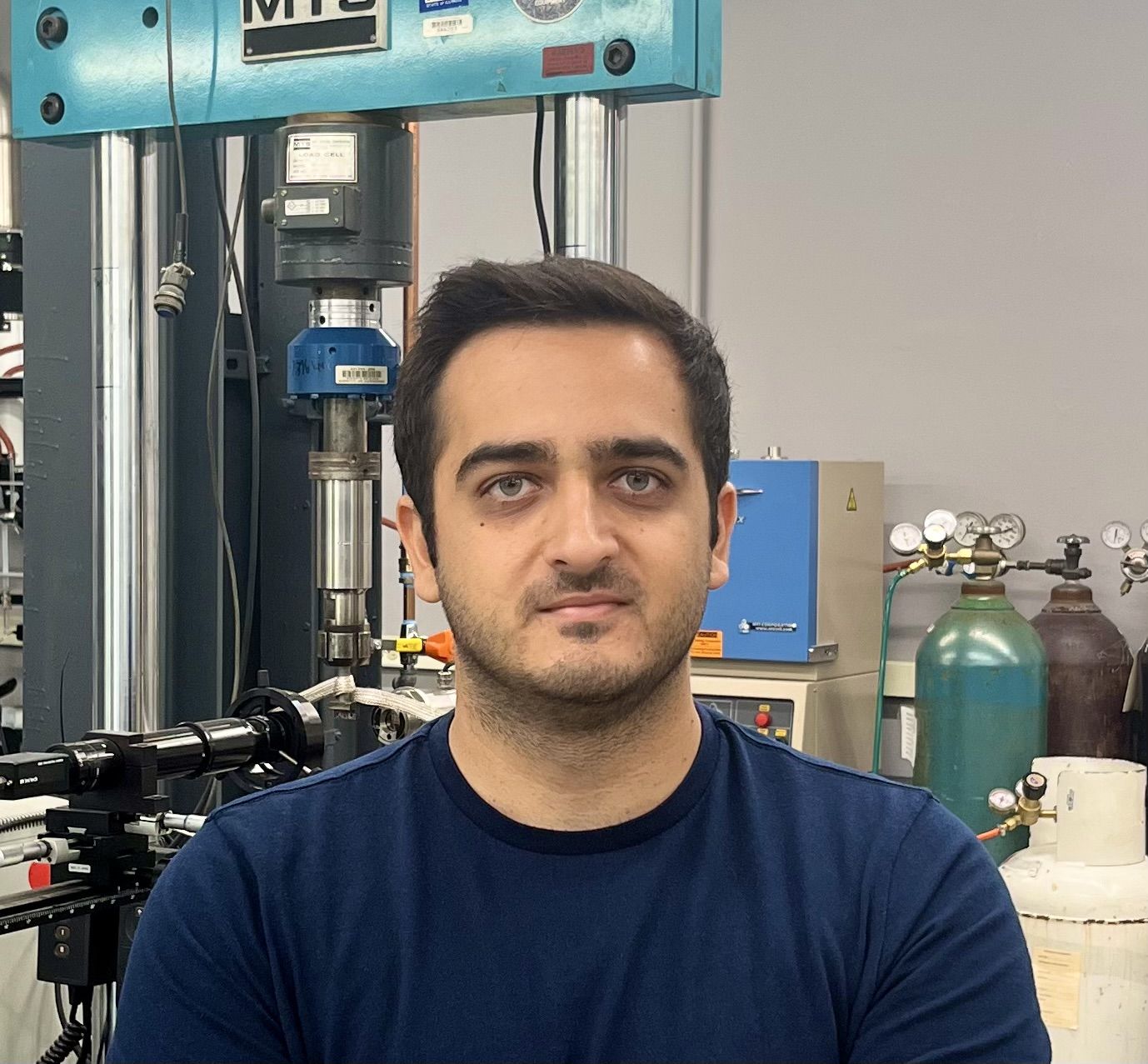
Orçun Koray Çelebi
Assistant Professor
Address
Department of Mechanical Engineering
Bilkent University
06800 Bilkent, Ankara
Office
EA112
Phone
+90 (312) 290-3427
Biography
Orçun Koray Çelebi joined Bilkent University’s Department of Mechanical Engineering as an Assistant Professor in September 2024. He received his B.S. degree in Mechanical Engineering from Boğaziçi University in 2018. Subsequently, he entered the direct Ph.D. program in the Department of Mechanical Science and Engineering at the University of Illinois Urbana-Champaign (UIUC).
Dr. Çelebi earned his Ph.D. degree in Mechanical Engineering in 2024 and continued his academic research at UIUC as a Postdoctoral Research Associate until joining Bilkent University.
His research focuses on the computational and theoretical modeling of plastic deformation mechanics in metallic materials, including pure metals, alloys, and high-entropy alloys. His work employs quantum mechanics-based simulation methods, such as Density Functional Theory (DFT), atomistic simulation techniques, including Molecular Dynamics (MD), and Machine Learning approaches.
Education
- Ph.D., Mechanical Engineering, University of Illinois Urbana-Champaign (2024)
- B.S., Mechanical Engineering, Boğaziçi University (2018)
Research
Dr. Çelebi leads the Atomistic Mechanics & Materials Modeling Laboratory (A3ML). The laboratory is dedicated to advancing the understanding of the structure, mechanics, and deformation physics of materials across multiple scales, ranging from the quantum level to the mesoscale.
To achieve this objective, the research efforts are directed towards the following areas:
- Development of predictive models that will guide the design of high-performance materials.
- Multiscale modeling of plastic deformation mechanics in metallic materials, including pure metals, alloys, and high-entropy alloys.
- First-principles modeling of crystal defects, including point, line, and interface defects, such as vacancies, dislocations, twins, and grain boundaries.
A3ML employs a broad range of computational techniques to investigate these research problems. These include quantum mechanics-based simulation methods, such as Density Functional Theory (DFT), atomistic approaches, such as Molecular Dynamics (MD), and Machine Learning methods.